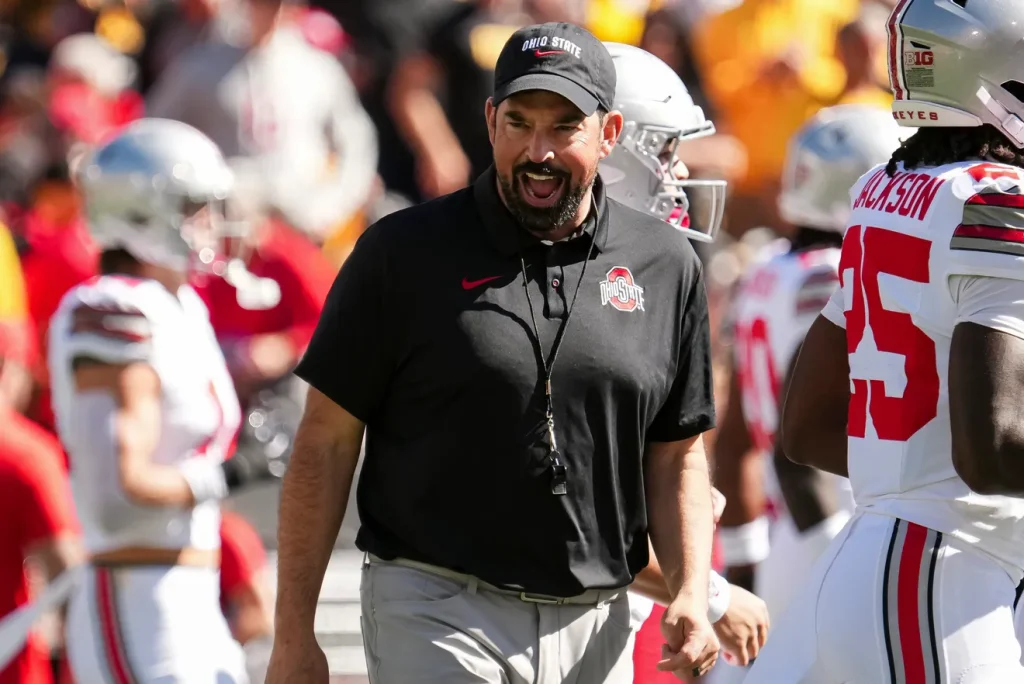
Ryan Day explained how Khary Wilder, Legend Bey, and Ohio State football players earn trust, opportunities, and playing time through communication, discipline, preparation, and accountability.
COLUMBUS, Ohio — Ryan Day has no problem recruiting talent. The harder part comes after the player gets to Ohio State.
“Nobody just gets on the field because they have talent,” Day said Tuesday.
Freshmen and transfers have a chance to compete for jobs, but Day expects them to meet the program’s standards before they earn those opportunities. That starts with understanding what is expected, doing the work, and showing the coaching staff they can handle the responsibility that comes with playing.
Day was asked Tuesday how young players, specifically Khary Wilder and Legend Bey, can build trust in a college football landscape where the transfer portal gives players another option when they are unhappy with their situation. His answer centered on communication between the coaching staff and the player.
“I think it’s all about communication and making sure that you sit down with the player and explain exactly what’s going on,” Day said. “If there’s any type of issue, then you get to ask, is there anything that’s going on here that’s unfair? Please speak up if that’s the case because here’s exactly what the expectations are, and if you fulfill the expectations, then we’re good. If you don’t, then we won’t.”
Day’s approach gives players a clear path. Coaches have to explain what they expect, and players have to meet those expectations. Playing time becomes the result of that process rather than something a player is entitled to because of his recruiting profile or previous experience.
“Now, it’s the coach’s job to make sure that they’re checking all the boxes and all the requirements to make sure that they’ve earned the opportunity to get on the field. It’s also the player’s responsibility to take the accountability to check those boxes, all the things that they need to do in order to get on the field,” Day said.
“Nobody just gets on the field because they have talent, but it’s the coaches’ job and the player’s job to make sure they’re doing all the things that they need to do to earn opportunities to play.”
Trust Has to Be Earned
Day said freshmen and transfers can compete for jobs, but they have to check the necessary boxes before earning an opportunity. Once they get on the field, they have to do their job and grade out. A player cannot assume another opportunity will automatically come after failing to handle the first one.
Day described those moments as part of a player’s maturation and said the faster young players understand what comes with an opportunity, the faster their development can move.
“The faster you can earn those opportunities and learn what comes with those opportunities, the faster that development is going to take off,” Day said.
Ohio State has already seen that process play out with young players this season. Legend Bey missed the first two days of fall camp after violating team rules, then worked his way back into the coaching staff’s trust. Day said Bey’s work and response helped him earn responsibility as a kickoff returner.
However, Bey has not seen much playing time since the opener against Ball State. He flashed with a 25-yard touchdown and has seen only four snaps since, despite not being listed on the availability report after dealing with an ankle injury. Ryan Day has indicated it’s trust-related, not a lingering injury, holding out Bey.
The same is true for Khary Wilder, who had his best game against Illinois, recording four quarterback pressures. But Wilder did not see the field against Iowa, and Day said he did not meet the standard the coaches want from players to get on the field.
For Day, that process is part of development. A player will make mistakes, but the next step has to show the coaching staff he understands the expectation and is ready for another chance.
Day Won’t Trade Standards for Retention
The transfer portal complicates that process, but Day does not believe it should change the standard.
He acknowledged Tuesday that communication becomes even more important when players can leave. A player who does not understand why he is not playing can become frustrated, which is why Day wants coaches to explain decisions and give players a chance to voice concerns.
He also made clear that communication does not mean compromising what Ohio State expects from its players.
“If you compromise your culture and your values and the requirements it takes to be a player in this program, then we’re going to lose our culture,” Day said. “And that cannot happen.”
He has made culture central to his program throughout his tenure, even as roster movement has reshaped college football. The circumstances around the program can change without changing the requirements for being part of it.
Day said everything within the program is “fair” and “very transparent,” but some players need time to understand how Ohio State operates. That is especially true for players coming from other programs who have to learn new coaches, teammates, expectations, and routines.
The coaching staff has to bring those players along. The players still have to meet the standard. Day compared that conversation to one he would have with his own son.
“This is it, man. I love you, but this is what needs to get done in order for you to have these opportunities,” Day said, illustrating the relationship Day is trying to build with his players. The coaches can be direct about what needs to improve while still making clear that the player has a path forward.
Talent Is Only Part of It
Day made the same point during an appearance on Greg Olsen’s podcast, Youth Inc., where he discussed the difference between the talent a player is given and the traits he can control.
Height and natural athletic ability are part of the equation. Work ethic, focus, belief, resilience, preparation, and discipline are different. Those are areas where Day believes a player has control.
Day used his son as an example, asking whether anyone is stopping him from becoming the hardest-working person in the country. “No,” Day said.
That philosophy fits the way Day has talked about development throughout this season. He wants players to focus on the process that allows them to perform consistently rather than relying on talent to bail them out.
It applies to Julian Sayin, too. Day has repeatedly emphasized process when discussing Ohio State’s quarterback, pointing to preparation, decision-making, and consistency rather than judging the position solely by the result of an individual play.
For young players, the message is that talent creates an opportunity to compete, but preparation and performance determine whether the coaching staff can keep trusting them.
The Goal Extends Beyond Ohio State
Day’s definition of development extends beyond a player’s role on the depth chart. While discussing his induction into the New Hampshire Football Hall of Fame, he reflected on coaches who invested in him when he was younger and helped shape the person and coach he became.
He wants to provide that same kind of investment to Ohio State’s players.
“I want to see you successful in 20 years,” Day said, which is why he keeps emphasizing habits players can control. Work ethic, preparation, discipline, and accountability can influence whether a player earns playing time, but those traits also follow him beyond college.
Day’s approach gives players a clear understanding of what they need to do. The coaching staff has to communicate those expectations, and the player has to respond when the opportunity comes. For Day, that process builds trust.
Players have to show they can handle the responsibility before the next opportunity comes their way, and the coaching staff has to give them a clear path to get there. At Ohio State, he wants players to know exactly what it takes to earn the next opportunity, and trust is built when they do it.

Blake Biscardi serves as Co-Founder, Lead Reporter, and Senior Editor of The Silver Bulletin. He hosts the Buckeye Cadence podcast, where he breaks down Ohio State football and basketball with an inside look into the programs. Covering Julian Sayin in New York City in 2025 was his Heisman moment, which became a viral moment in its own right. Biscardi is a member of the Football Writers Association of America (FWAA) and has degrees in Business Administration and Strategic Communication & Leadership.
Discover more from The Silver Bulletin
Subscribe to get the latest posts sent to your email.