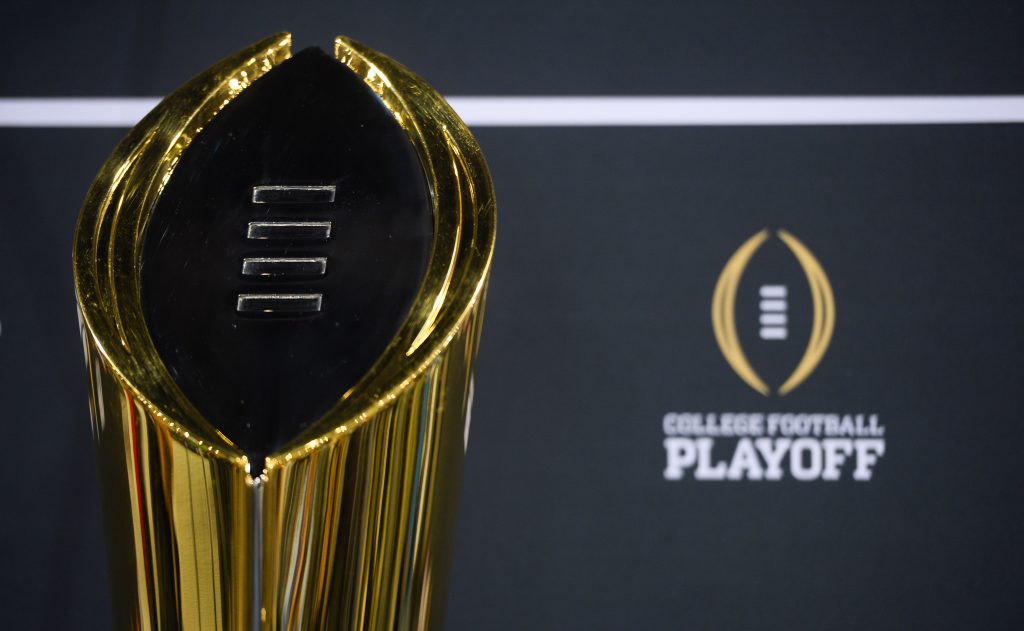
The 12-team College Football Playoff is going to expand, but which number is the sweet spot for College Football: 16 or 24?
College football is constantly changing as all conferences are moving to nine-game schedules in 2026. With the potential loss of future big-time regular-season non-conference matchups such as the home-and-home series between Alabama and Ohio State in 2027 and 2028.
With the College Football Playoff likely expanding again by 2029, I put my own twist on what I believe college football should look like. My proposal includes conference challenges and a 16-team playoff.
Regular Season Conference Challenges
Make the Power 4 conferences play each other on a rotating basis, similar to how college basketball used to do with the Big Ten-ACC Challenge a few years back. Here is what those challenges would look like based on the standings from the previous season:
2029
Big Ten vs SEC
ACC vs Big 12
2030
Big Ten vs ACC
SEC vs Big 12
2031
Big Ten vs Big 12
ACC vs SEC
Also, in those schedules, schools can still schedule non-Power 4 schools such as teams from the American, Mountain West, Pac-12, Sun Belt, MAC, Conference USA, and Notre Dame.
The benefit of having these challenges would be the creation of guaranteed, meaningful marquee matchups and the opportunity to determine which conference is the best in college football. The only non-conference games scheduled would be against non-Power 4 opponents.
Post Season and Playoffs
Traditional conference championship games would still be in place, but conferences would also hold conference play-in games to determine their automatic qualifiers. These games would be played the first weekend in December, after the regular season.
Play in games would be based on conference standings and will look like this
Big Ten and SEC
No. 1 vs No. 2 Conference Title = Title Game location
No. 3 vs # No. 6 – Highest Seed host
No. 4 vs No. 5 – Highest Seed host
ACC and Big 12
No. 1 vs No. 2: Conference Title = Title Game location
No. 3 vs No. 4: Highest Seed host
Notre Dame is in a unique situation if it remains independent. Notre Dame would be sitting at home while the schools jockey for playoff seeding.
Each conference would receive automatic bids to the playoff:
- Big Ten – 4 automatic bids
- SEC – 4 automatic bids
- Big 12 – 3 automatic bids
- ACC – 3 automatic bids
- Non-Power 4 conferences or Notre Dame – 2 automatic bids
Keep note: Notre Dame would have to be ranked in the Top 16 to make the playoffs and ranked in the Top 8 by the committee to host a playoff game.
Under my 16-team playoff format, there would be no first-round conference rematches. All First and Second Round playoff games would be on campus, with the higher seeds hosting. These games will start the second weekend in December
Here is how the bracket would look with playoff games beginning with eight first-round games played on campus sites. The higher seed earns home-field advantage.
The matchups would be structured as follows:
- No. 1 vs. No. 16
- No. 2 vs. No. 15
- No. 3 vs. No. 14
- No. 4 vs. No. 13
- No. 5 vs. No. 12
- No. 6 vs. No. 11
- No. 7 vs. No. 10
- No. 8 vs. No. 9
The benefit of home playoff games and no first-round byes comes into play in the current 12-team playoff format, where first-round byes are 1-7 overall. Eliminating byes helps keep teams from rusting and allows the season to flow better.
Second Round: Highest Seed Hosts Again
The quarterfinal round would also be played at campus sites, once again giving home-field advantage to the highest remaining seed. Games would be played the third weekend of December.
The bracket groups would look like this:
- Winner of (1 vs. 16) plays Winner of (8 vs. 9)
- Winner of (4 vs. 13) plays Winner of (5 vs. 12)
- Winner of (3 vs. 14) plays Winner of (6 vs. 11)
- Winner of (2 vs. 15) plays Winner of (7 vs. 10)
If higher seeds continue to advance, the top teams could host two playoff games before ever leaving campus. This drives more revenue for each school and gives fans the chance to see their team continue to compete at the highest level in their home stadium.
Semi-Finals: Bowl Tradition Returns
After two rounds of home games, the final four teams would move to traditional neutral-site bowl games and the tradition of playing on New Year’s Day.
- The winner of the top half of the bracket would advance to the Orange Bowl.
- The winner of the bottom half would advance to the Sugar Bowl.
These semifinal games would preserve historic bowl prestige while still functioning within the playoff structure.
National Championship: Rose Bowl Game
The season would culminate at one of college football’s most iconic venues and games, the Rose Bowl Game, where the winners of the Orange and Sugar Bowls would meet for the National Championship.
Why This System Works
This structure for a rotating Power 4 Conference Challenge would guarantee meaningful, high-level non-conference matchups every season, while also keeping conference pride on the line and sparking national media debate. By matching the Big Ten, SEC, ACC, and Big 12 on a rotating basis, the fans are guaranteed marquee games that offer tougher schedules and create clear conference bragging rights.
The 16-team format keeps more teams nationally relevant, boosts television value, enhances recruiting narratives, and provides results to determine which conferences truly stand at the top of college football. At the same time, schools still maintain the flexibility to schedule non-Power 4 opponents or Notre Dame, preserving regional rivalries and opportunities for broader access across the sport.
The expanded 16-team playoff format builds on momentum by eliminating the byes, introducing conference play-in games, and rewarding schools with on-campus playoff games in December. This generates local revenue and gives the fans an opportunity to experience postseason football in their own stadiums. The format preserves tradition by moving the semifinals to the Orange Bowl and the Sugar Bowl, culminating in the National Championship at the historic Rose Bowl Game.
Overall, this system combines the modern competitiveness with college football’s old traditions and pageantry, by delivering more high-profile games, a clearer path to the playoff, and a structure that keeps fans fully engaged from August through the National Championship

Discover more from The Silver Bulletin
Subscribe to get the latest posts sent to your email.